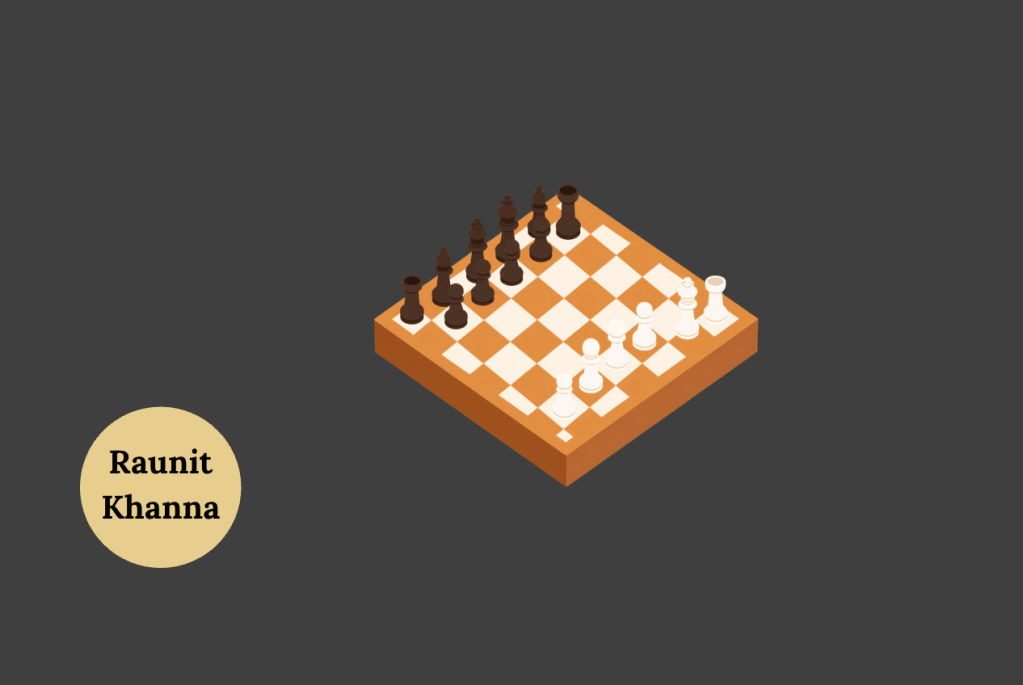

A crowd amasses as the spotlight shines on you in the final game of the tournament. Tick! Tick! The digits of the clock start counting down rapidly, the murmurs of the crowd get louder, and the thought of losing triggers panic signals. You have just experienced the anxiety, pressure, and internal chaos that a chess player’s mind undergoes in a high-stakes game. Chess was recognized as a sport by the International Olympic Committee in 1999, and exploded in popularity after the Netflix show “The Queen’s Gambit.” Chess’s rapid growth influenced a surge in research and studies discovering the benefits and drawbacks of the game.
One of the biggest benefits of playing chess is the impact it has on a person’s cognitive skills and problem-solving. In 2016, a study by researchers Giovanni Sala and Fernand Gobet completed an experiment where they had students take a chess lesson once a week for an entire school year. The study showed that chess enhances mathematical achievements, overall cognitive ability, and a small improvement in literacy ability. On top of that, in a chess game, your brain processes lots of different information in order to decipher the best possible outcome. The scrambling to find the proper continuation is what causes intense stress. For example, studies show that a player’s heartbeat can shoot up from 75 bpm to over 120 bpm during a match, which results in their body burning energy the same as light physical exercise, without even having to get up.
Chess not only burns calories, but it also reshapes how you look at social situations due to enhanced brain function. In simple terms, this mental exercise optimizes a multitude of areas. “The Theory of Mind” is an important way for emotional growth to start, as explained by psychologists. This theory is defined as the capacity to understand other individuals’ beliefs, desires, intentions, emotions, and thoughts. This ability gets strengthened through constant exposure to chess, in which both players have to calculate their opponent’s position and put themselves in their opponent’s shoes to check for game-changing moves or plans. As psychologists have learned, the theory of mind enhances navigation through social interactions, empathy, and helps improve relationships with friends and family.
Moreover, due to the spread of social media platforms such as TikTok, YouTube, and Instagram, having the ability to focus is more important now than ever before. This is another trait that chess helps develop, as chess requires unparalleled levels of focus. During long periods of thinking, players often enter a “flow state,” allowing the game to be prioritized. Studies show that this state of mind is comparable to a pain reliever, as it has been proven to literally help people tolerate physical pain.
While studies have shown the impact chess has, the reality is much simpler: chess is a sport and a board game that changed my life and the lives of many others. The number of lessons this 8×8 board teaches you is something that is unmatched. The essence of chess is both a mental and physical battle. The only one standing between you and victory is yourself.
Your move.
References:
https://b-reddy.org/can-you-avoid-exercise-if-you-play-chess/
https://www.healthline.com/health/benefits-of-playing-chess#develops-perspective
https://pmc.ncbi.nlm.nih.gov/articles/PMC5322219/
https://www.chess.com/blog/HitomiKatsuragi/theory-of-mind-chess-as-an-intellectual-art
https://www.chess.com/blog/Chessable/pain-relief-and-the-power-of-chess


Leave a Reply