
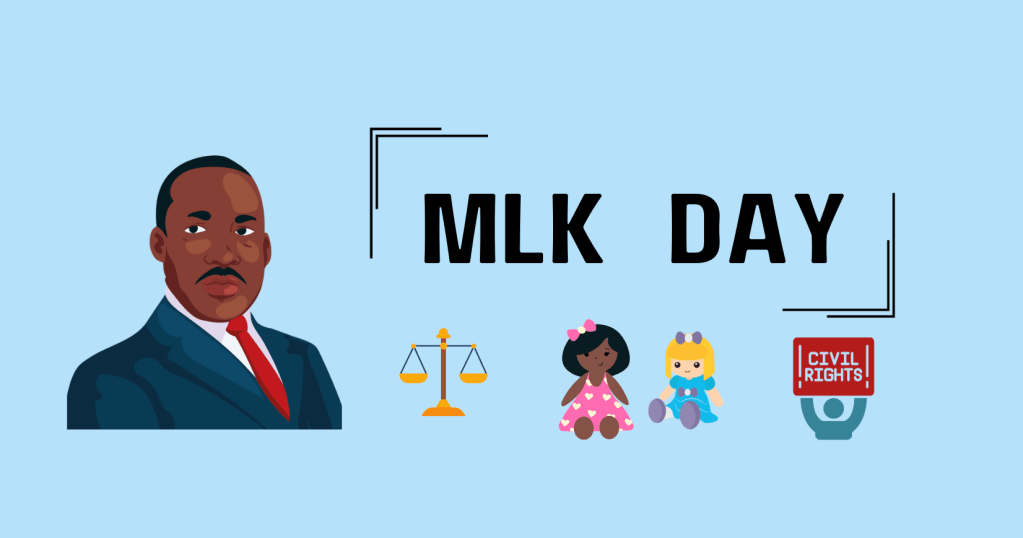

Today—January 20th, 2025—is Martin Luther King Jr. Day, which falls on the third Monday in January since its inception in 1994. MLK Day is a time of celebration; a time to recognize the life and legacy of Martin Luther King Jr., as well as the larger Civil Rights Movement. Equally important, today is a time of reflection—a time to see how far society has come, while looking to the future and emphasizing the immense distance left to go. The Civil Rights Movement was a triumph in many regards, and the societal change it brought has been the subject of much discussion. Psychologists studying social justice, prejudice, and group dynamics have reflected on the Civil Rights Movement to effectively advocate for social justice in contemporary society. Indeed, psychology itself helped shape the Civil Rights Movement, most notably through the monumental findings of Kenneth and Mamie Clark’s “The Doll Test” experiment in the 1940s. This article examines key psychological and social forces that contributed to the Civil Rights Movement and remain pertinent to achieving greater equality today.
The Doll Experiments & Psychological Effects of Discrimination
The Doll Experiments were a series of tests conducted by Kenneth and Mamie Clark, a couple who had received Psychology Ph.D.s at Columbia University, becoming the first African Americans to do so. Kenneth Clark would later become the first Black President of the American Psychological Association (APA). Beginning in the 1930s, the Clarks started administering “Doll Experiments” to Black children, to uncover how race and discrimination shaped personal identity. The tests themselves were relatively straightforward. Four nearly identical dolls, two white and two Black, were presented to Black children, and a series of questions were asked. These questions included inquiries as to which doll looked “nice,” and which doll the children wanted to play with. The results of the study were deeply disturbing.
Time and time again, the Clarks found that Black children described the white dolls as being more desirable. Across over 250 Black children tested, who ranged in age from 3 to 7, the horrifying effects of prejudice on self-esteem and identity became empirically clear. The Clarks initially delayed publishing their troubling findings, but over a decade later they were approached by lawyers of the NAACP, a key civil rights group. The NAACP wanted to use the findings of the Doll Experiment in the monumental Brown v. Board of Education Case, a Supreme Court case that would decide whether segregation in schools was Constitutional. Kenneth Clark agreed, and his testimony regarding the psychological damage of segregation served as part of the NAACP’s argument. The 1954 Brown v. Board of Education became a landmark case and a catalyst for the Civil Rights Movement of the 1960s. In their decision to end segregation in schools, justices cited the Doll Experiment, writing that for Black children, school segregation “generates a feeling of inferiority as to their status in the community that may affect their hearts and minds in a way unlikely ever to be undone.” Brown v. Board was the first court case that referenced research from psychology or the social sciences.
The Doll Experiments sparked discussion about the detrimental effects of discrimination beyond the visible eye, illustrating the ingrained damage to self-esteem, self-image, and the hidden human psyche. These milestone findings revealed how external social systems and attitudes could deeply damage people’s internalized senses of identity and self. Since the Civil Rights Movement, the Doll Experiments have been replicated a number of times to determine whether internalized preference for lighter skin tones still exists. Unfortunately, a 2017 study by Byrd et al. found that this implicit preference persisted, but noted that it was on the decline. A 2019 study by Parsons et al. asked Black and Hispanic children to label dolls with descriptors like “smart” and “pretty,” and discouragingly concluded that racial bias was still ingrained and deleterious. It is clear that more work to combat discrimination and the internal damage it causes must be conducted.
Collective Action & The Basis of Protest
Movements like the Civil Rights Movement are made possible due to Collective Action, which forms the cornerstone of protests, strikes, boycotts, and nearly every other form of advocacy. Collective Action refers to when members of a group act in a coordinated way to pursue common goals. As with the Civil Rights Movement, protests often arise due to long-suppressed discontent and injustice culminating in watershed events. Several factors exemplified by the Civil Rights Movement are needed for Collective Action to succeed.
First, to create meaningful change, a group must have widespread support from its members. According to network theory, Collective Action is rooted in individuals being immersed in a network through personal relationships, or commonalities like sports leagues or church congregations. To foster deep support, Martin Luther King Jr. and other Civil Rights leaders rallied people around shared identities, grievances, and religious or democratic ideals. Some studies have suggested that physical proximity alone, such as in neighborhoods, impacts how tight networks are and determines the extent of the activism. Indeed, during the Civil Rights Movement many of the demonstrators were within close communities and had tight interpersonal relationships through businesses, student groups like the SNCC, or other ties. High levels of community support made boycotts like the Montgomery Bus Boycott possible, during which about 40,000 African Americans refused to ride the bus for 381 days—walking, biking, or carpooling far distances instead. Widespread support for social movements doesn’t spontaneously materialize, rather, networks of like-minded individuals are needed to encourage others to become involved. Nevertheless, some suggest that the Civil Rights Movement was more fueled by the media and a few prominent leaders than a widespread network pushing people to act.
Social Identity Theory posits that people form their identities based on group membership and the sense of belonging and purpose that groups provide. In addition to having a tightly-knit network, Collective Action relies on convincing group members of a central purpose that is achievable and worthwhile. In the Civil Rights Movement, early legislative victories like Brown v. Board and the Montgomery Bus Boycott fueled the belief that Civil Rights were attainable. This initial progress and optimism in the 1950s was critical to sustaining the protest throughout the 1960s. Collective Action also revolves around having focused goals and mobilizing people to act despite possible dangers. The appealing concept of nonviolence and organized marches, boycotts, and sit-ins gave people actionable items to advance the Civil Rights cause. Many successful initiatives focused on a particular achievement, such as ending lunch counter segregation in Greensboro, North Carolina or ending bus segregation in Montgomery, rather than the concept of Civil Rights as a whole. Strong network ties and beliefs contributed to a sense of solidarity, and a willingness to suffer for the greater movement. During sit-ins, students of the SNCC were trained in nonviolent methods and how to take blows rather than retaliate. During the 1963 Children’s March in Birmingham, Alabama, hundreds of African American students were arrested for marching but willingly stayed together in jail. The jail system became overwhelmed by sheer numbers, forcing the authorities to negotiate with the Civil Rights leaders. In this way, the Civil Rights Movement largely succeeded by the principles of strength and solidarity in numbers. The tenets of Collective Action—forming strong group networks, realistic goals, actionable items, and solidarity—helped the movement gain traction and prevail.
Lastly, securing dramatic change requires movements to appeal to and sway society’s core beliefs. During the Civil Rights Movement, incidents of police brutality against demonstrators were highly televised, which alarmed the national conscience. For example, during the Children’s March cruel images of student demonstrators being attacked by fire hoses and police dogs were broadcast to the public, leading to widespread outrage. The Civil Rights Movement appealed to America’s sense of morality and democratic values like liberty, equality, and freedom. Cognitive Dissonance is the internal distress experienced when an individual’s attitudes don’t align with their behaviors. This psychological unease can play a role in changing the public’s responses toward social movements, in which it becomes harder and harder to ignore immorality and hypocrisy. For instance, as the Civil Rights Movement progressed, white Americans claiming that they believed in freedom and basic civil rights found it incompatible to sustain this belief and simultaneously uphold racist policies. As the blatant evils of Jim Crow became an undeniable topic of international concern, JFK and others were compelled to pass legislation to confront the issue.
Collective Memory & Civil Rights Legacy
The Civil Rights Movement left a powerful legacy, and many African Americans from the time period have a strong Collective Memory of the events. Collective Memory refers to when a social group shares a recollection of an event that becomes central to the group’s identity. Research has suggested that memories of many vivid developments of the Civil Rights Movement are similar among African Americans, and, due to processes of Collective Action, the attitudes and emotions of these events are framed in specific ways. A study by Harris (2007) used data from the 1966 Harris-Newsweek Survey of over 1,000 Black adults from across the nation, that aimed to measure Black Americans’ social and political attitudes. The study found that many events, specifically (a) The Scottsboro Trials, (b) The Murder of Emmit Till, (c) The Montgomery Bus Boycott and (d) The Brown v. Board Case, were widely recalled by African Americans from that time period. Moreover, these narratives had been passed down through the generations, shaping common beliefs and values. Rather than each individual having a unique memory of what happened, surrounding social contexts like the media transformed how these events were widely perceived. For instance, horrible tragedies that sparked fear or grief may instead be generally remembered as rallying moments of outrage and momentum. The study suggests that many Black Americans hold similar recollections of the Civil Rights Movement, which can powerfully influence how a group perceives their past and looks to their future.
References
Atari, B. (2022, March 10). Mamie Phipps Clark: The Pioneering Psychologist Behind the Famed “Dolls Test” . The Dig at Howard University. https://thedig.howard.edu/all-stories/mamie-phipps-clark-pioneering-psychologist-behind-famed-dolls-test
Byrd, D., Ceacal, Y. R., Felton, J., Nicholson, C., Rhaney, D. M. L., McCray, N., & Young, J. (2017). A modern doll study: Self concept. Race, Gender & Class, 24(1-2), 186-202.
Duncan, L., Meyer, D. S., Martin, A., Moghaddam, F., & Binder, A. (2024, May 6). Why do people protest, and do protests work? – sciline. SciLine. https://www.sciline.org/social-sciences/protests-sociology-psychology/
Harris, F. C. (2006). It Takes a Tragedy to Arouse Them: Collective Memory and Collective Action during the Civil Rights Movement. Social Movement Studies, 5(1), 19–43. https://doi.org/10.1080/14742830600621159
McLeod, S. (2023, October 5). Social Identity Theory in Psychology (Tajfel & Turner, 1979). Simply Psychology. https://www.simplypsychology.org/social-identity-theory.html
Parsons, S., Collins, T. Z., & Cox, R. D. (2019). Race and color in Louisiana: An update on the Clark and Clark doll experiment. Journal of Race & Policy, 15(1).
Public Broadcasting Service. (n.d.). Milestones Of The Civil Rights Movement. PBS. https://www.pbs.org/wgbh/americanexperience/features/eyesontheprize-milestones-civil-rights-movement/
A Revealing Experiment Brown v. Board and “The Doll Test.” Legal Defense Fund. (2023, November 9). https://www.naacpldf.org/brown-vs-board/significance-doll-test/
Timeline of the Civil Rights Movement 1954 – 1964. John F. Kennedy Presidential Library and Museum. (n.d.). https://www.jfklibrary.org/learn/education/teachers/curricular-resources/civil-rights-civic-action/timeline-civil-rights
 Psychology for Society
Leave a comment