
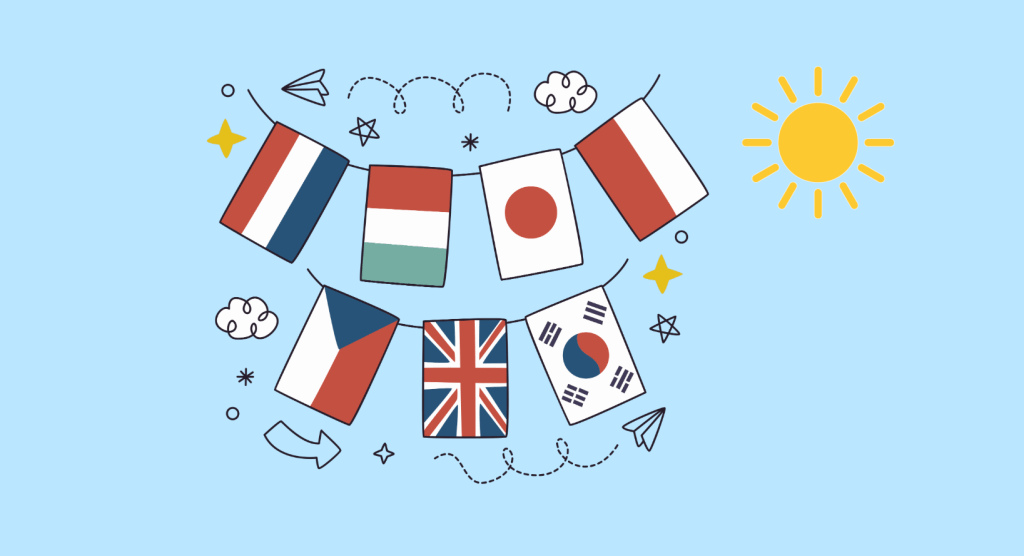

For many students, summer break is synonymous with days of sleeping in, catching up, and—if lucky—traveling someplace new. Instagram feeds in these months are often populated by exotic photos of Greece and Spain; of Tokyo streets and glassy Norwegian fjords. Student exchange programs, international service trips, or extended work stays are just some of the many avenues for cross-cultural exposure to occur. Traveling, especially to a foreign country, brings with it a host of new opportunities and beneficial cognitive effects. Travel boosts overall well-being, reduces stress, and increases open-mindedness to other cultures. Moreover, cross-cultural travel has more generalizable benefits on the mind, resulting in higher creativity, empathy, trust, and greater emotional intelligence. In this article, we break down the main psychological upsides of traveling to different countries and experiencing other lifestyles.
The most intuitive benefit of travel is in the positive emotions and fun experiences it brings. While many people flock to the same tried-and-true vacation spots every year, visiting an entirely new place is a great way to introduce novelty. Novelty is a key ingredient to happiness in everyday life, and novel experiences directly trigger the rewarding dopamine system. Unexpected events light up more areas of the brain and leave stronger memories, which is why many people can recall vivid moments from vacations, but not, for example, what they ate yesterday for breakfast. Becoming immersed in another culture is an opportunity to behave in novel ways, such as by navigating a subway for the first time, bartering at an outdoor marketplace, or talking to strangers more openly. Frequent exposure to novel environments has been linked to greater neural plasticity in animals and can support the Long-Term Potentiation (LTP) of neurons, thereby boosting learning and memory.
Building on this notion of novelty, international travel is inherently fraught with unexpectedness, requiring alertness and flexibility. Travel is often exhausting due to a phenomenon known as decision fatigue, as new places force people to constantly react to their surroundings by making deliberate choices. In routine life, our brains spend nearly half of the day on autopilot. Simple acts like navigating the subway, ordering a sandwich, or cashing a check at the bank require little cognitive exertion in familiar settings. However, unfamiliar environments require one to be more perceptive in the moment, which naturally gives way to richer experiences. As such, traveling to new countries increases cognitive flexibility, independence, and adaptability to new situations. People who travel to foreign countries also become more emotionally resilient and can better identify and control their emotions. A study of 46 workers in the Netherlands found that workers who took a 2 week vacation increased in the number of creative ideas they could produce on Guilford’s Alternative Uses Test from pre- to post-vacation measures. This finding demonstrates how the positive emotionality, novelty, and cognitive flexibility characteristic of travel are conducive to boosting creativity.
Experiencing another culture firsthand is also vital to increasing empathy towards others from diverse backgrounds and increasing cultural intelligence. According to Social Learning Theory (SLT), people acquire social cues and acceptable behaviors by observing how others behave. Travel can lead to improved appreciation of various cultures’ social norms, greater cross-cultural communication skills, and open-mindedness. Cao et al. (2013) found that adults who traveled to foreign countries developed greater trust not only toward those specific outgroups but also greater acceptance in general. This aligns with Gordon Allport’s Intergroup Contact Theory, which posits that interaction with different outgroups dismantles prejudice and fear. The more exposure someone has to diverse countries, the more adept they become at navigating different social situations with varying norms. Importantly, Cao et. al found a distinction between breadth and depth of travel, where visiting more countries (breadth) led to greater generalized trust, while the time spent in each country (depth) did not have as large an impact. Extended stays in another country can also promote acculturation, or the adoption of another culture. However, a person’s open-mindedness to engaging with another culture, or lack thereof, dictates the extent to which this confluence will occur. There are four proposed states of acculturation: assimilation (full immersion into another culture), separation (a desire to uphold a distinction between cultures), integration (wanting to incorporate aspects of another culture), and marginalization (total disinterest in learning about another culture). Ultimately, traveling abroad and engaging with new cultures over the summer can be stimulating and enriching, but—just like any other pastime—its cognitive effects and benefits depend on what one makes of the experience.
References
Cao, J., Galinsky, A. D., & Maddux, W. W. (2013). Does Travel Broaden the Mind? Breadth of Foreign Experiences Increases Generalized Trust. Social Psychological and Personality Science, 5(5), 517-525. https://doi.org/10.1177/1948550613514456 (Original work published 2014)
Crowne, K. A. (2013). Cultural exposure, emotional intelligence, and cultural intelligence: An exploratory study. International Journal of Cross Cultural Management, 13(1), 5-22. https://doi.org/10.1177/1470595812452633 (Original work published 2013)
De Bloom, J., Ritter, S., Kühnel, J., Reinders, J., & Geurts, S. (2014). Vacation from work: A ‘ticket to creativity’?: The effects of recreational travel on cognitive flexibility and originality. Tourism Management, 44, 164-171.
Kashdan, T. B. (2018, January 26). The Mental Benefits of Vacationing Somewhere New. Harvard Business Review. Retrieved June 27, 2025, from https://hbr.org/2018/01/the-mental-benefits-of-vacationing-somewhere-new
Lorents, A., Ruitenberg, M. F. L., & Schomaker, J. (2023). Novelty-induced memory boosts in humans: The when and how. Heliyon, 9(3), e14410. https://doi.org/10.1016/j.heliyon.2023.e14410
 Psychology for Society
Leave a comment