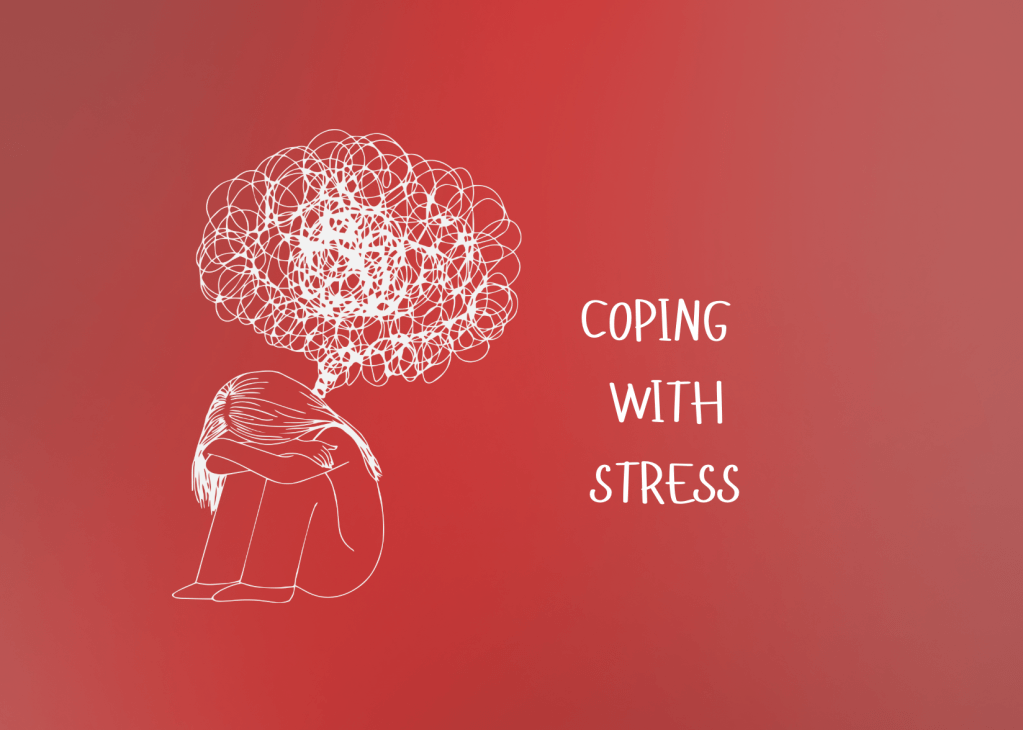

Our minds are equipped with many different ways of firing up to confront stress, which, despite its reputation as a negative emotion, can also serve as a powerful motivating force that is not inherently detrimental. The impending storm clouds of stress never seem to be far from our everyday lives, arising over significant life changes—a new move, a new routine, a new job—and over problems on a smaller scale, such as fights with family members or finals week. However, it goes without saying that when stress becomes overwhelming we can suffer crippling psychological and physiological effects. The extreme of this is Generalized Anxiety Disorder, which involves a state of stress persisting in a person’s life for over six months and is one of the most prevalent mental health conditions, often accompanied by symptoms like an inability to relax or headaches.
Physiological Effects of Stress
Unsurprisingly, the mind and body are intrinsically related, and stress can physically manifest throughout many of the body’s systems. There are two subdivisions of the autonomic nervous system—the sympathetic nervous system and the parasympathetic nervous system—that operate in conjunction to control glands and hormones in the body. During times of relaxation the parasympathetic nervous system runs the show; however, stress causes the sympathetic nervous system to activate and initiate the fight-flight-or-freeze response instead. When triggered, the sympathetic nervous system instructs the pupils to dilate, the heart to beat faster, slows digestion, and reduces the amount of saliva in the mouth. Moreover, stress causes the musculoskeletal system to tighten, and with persistent stress, tense muscles near the head and shoulders can contribute to migraines and headaches. Stress can also worsen muscle atrophy and chronic injuries like those in the lower back.
Another important, and unfortunate, link exists between stress and heart disease. Stress releases neurotransmitters like cortisol, adrenaline, and noradrenaline into the bloodstream, which can increase heart rate and elevate blood pressure. As such, stress is often related to heart attacks and strokes. The body produces cortisol when the brain’s pituitary gland (in charge of the endocrine/hormone system) sends a signal to the adrenal glands, which are situated above the kidneys. While cortisol normally aids with concentration and energy, too much cortisol can interfere with the immune system’s communication and is linked to issues with metabolism and obesity.
General Adaptation Syndrome
Zooming out, coping with stressful events is part and parcel with daily life for most people and follows some predictable patterns. General Adaptation Syndrome (GAS) was developed by endocrinologist Hans Selye of McGill and Johns Hopkins University to describe the typical cycle in which the body responds to stress. Selye proposed that the body goes through three common stages in the face of stress: alarm, resistance, and exhaustion. For instance, a student approaching finals week may experience the Alarm stage the weekend before finals. Alarm involves the sympathetic nervous system amping up to face the challenge and the body becoming more alert and energized. Throughout finals week, the Resistance stage is marked by a decline in sympathetic nervous system activity as the mind powers through tests and the body attempts to adjust. Blood pressure and cortisol levels remain high as the body tries to prolong a state of high attention. Lastly, the body initiates the Exhaustion Phase after finals week concludes. Exhaustion after a period of sustained stress is marked by diminished immune system capability, which is why many students get sick after these draining weeks. Burnout and fatigue also accompany this stage.
Other Coping Strategies
Psychologists use many other terms to describe coping responses in addition to General Adaptation Syndrome. The Tend-and-Befriend Theory was developed by Shelley E. Taylor at UCLA and states that in times of stress, humans are biologically driven to seek connection and affiliation with others. Taylor proposed that a release of oxytocin is the primary driver of this phenomenon, and that women are more likely than men to seek social protection and support to deal with anxiety. She also suggested that this tendency to lean on others for support may help women live longer. Other research has found differences in how different genders typically deal with stress. While women experience greater sadness and are at a heightened risk for anxiety and depression, stress causes men to have higher craving and reward system activation, leading to higher rates of substance disorders and abuse.
Psychologists also describe strategies as either problem-focused coping or emotion-focused coping. People who exhibit problem-focused coping tend to focus on the root of the problem itself and come up with ways to tackle the issue. To illustrate, someone stressed about a shaky friendship may contemplate ways to reach out to the friend to alleviate stress. Meanwhile, rather than attempting to resolve the problem, emotion-focused coping is about accepting the situation and trying to control one’s emotional response. This involves a fair share of wishful thinking and techniques like meditation, journaling, or avoiding the problem altogether. In general, avoidance techniques and distancing are less effective ways to confront stress, and individuals who regularly practice problem-focused coping attain better outcomes. In therapy, both cognitive and behavioral approaches are commonly used to tackle stress. Cognitive approaches involve changing one’s thoughts around the stressor and replacing maladaptive patterns (ex: “losing this job was the worst thing that’s ever happened to me”) with new ways of perceiving the issue (ex: “losing this job is just another setback I can overcome”). Behavioral approaches to stress may emphasize responses such as practicing breathing to calm down or taking walks instead of maladaptive behaviors like isolating oneself or fighting with others.
Conclusion
Ultimately, the mind is equipped with a variety of ways to prepare and avoid negative health effects when dealing with stress. The sympathetic nervous system plays a defining role in the body’s response, and for particularly stressful life episodes, like finals week, the body tends to follow the stages of General Adaptation Syndrome. The physiological toll of stress is high, and getting adequate sleep, exercise, and eating well are vital during the Resistance and Exhaustion phases. Stress can also be dealt with by seeking connection with others (Tend and Befriend Theory) or through problem-focused and emotion-focused coping strategies—or a mix of both. Being cognizant of one’s cognitive and behavioral reactions to stress is critical to sustaining a better state of mind and a healthier, happier life.
References
American Psychological Association. (2023, March 8). Stress effects on the body. https://www.apa.org/topics/stress/body
Chaplin, T. M., Hong, K., Bergquist, K., & Sinha, R. (2008). Gender differences in response to emotional stress: an assessment across subjective, behavioral, and physiological domains and relations to alcohol craving. Alcoholism, clinical and experimental research, 32(7), 1242–1250. https://doi.org/10.1111/j.1530-0277.2008.00679.x
Coping strategies. Coping Strategies – an overview | ScienceDirect Topics. (n.d.). https://www.sciencedirect.com/topics/psychology/coping-strategies
Generalized anxiety disorder (GAD). Johns Hopkins Medicine. (2024, April 16). https://www.hopkinsmedicine.org/health/conditions-and-diseases/generalized-anxiety-disorder#:~:text=What%20is%20generalized%20anxiety%20disorder,for%20at%20least%206%20months.
Higuera, V. (2018, October 6). General adaptation syndrome: Your body’s response to stress. Healthline. https://www.healthline.com/health/general-adaptation-syndrome
Taylor, S. E. (2012). Tend and befriend theory. In P. A. M. Van Lange, A. W. Kruglanski, & E. T. Higgins (Eds.), Handbook of theories of social psychology (pp. 32–49). Sage Publications Ltd. https://doi.org/10.4135/9781446249215.n3
 Psychology for Society
Leave a comment