
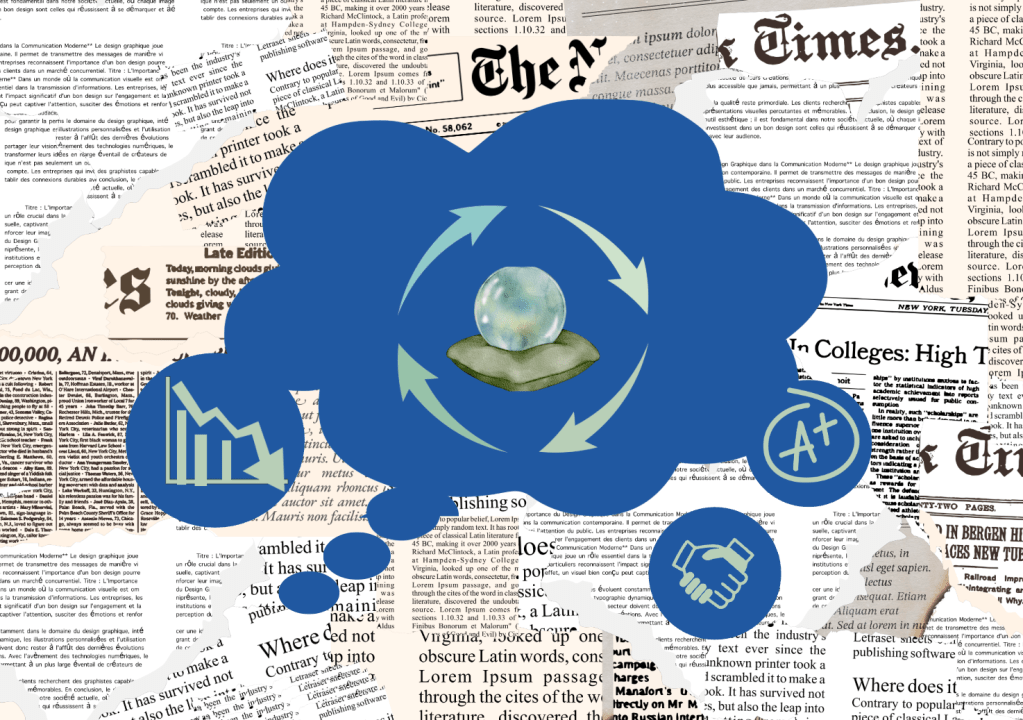

Self-fulfilling prophecies are misguided beliefs that come to impact how people behave and eventually—as a result of this influence—manifest as true. Self-fulfilling prophecies are pervasive in everyday life and influence important outcomes in education, healthcare, business, and many other sectors. For instance, many historians agree that the devastating stock market crash and subsequent bank run that precipitated the Great Depression were partially caused by self-fulfilling prophecies. The stock market serves as a very conspicuous illustration of this phenomenon—prices are largely driven by people’s expectations and predictions for how a company will perform. If investors believe the market is going to crash, they may start rapidly selling off shares, causing others to panic and thus creating a self-fulfilling prophecy. More recently, stock markets fell on April 3rd and 4th of last week—although to a much smaller extent—due to the United States’ implementation of tariffs. While these tariffs will certainly directly affect the economy itself, the market’s reaction to these tariffs or fears of an economic downturn may contribute to weakening the economy.
The Stages of a Self-Fulfilling Prophecy
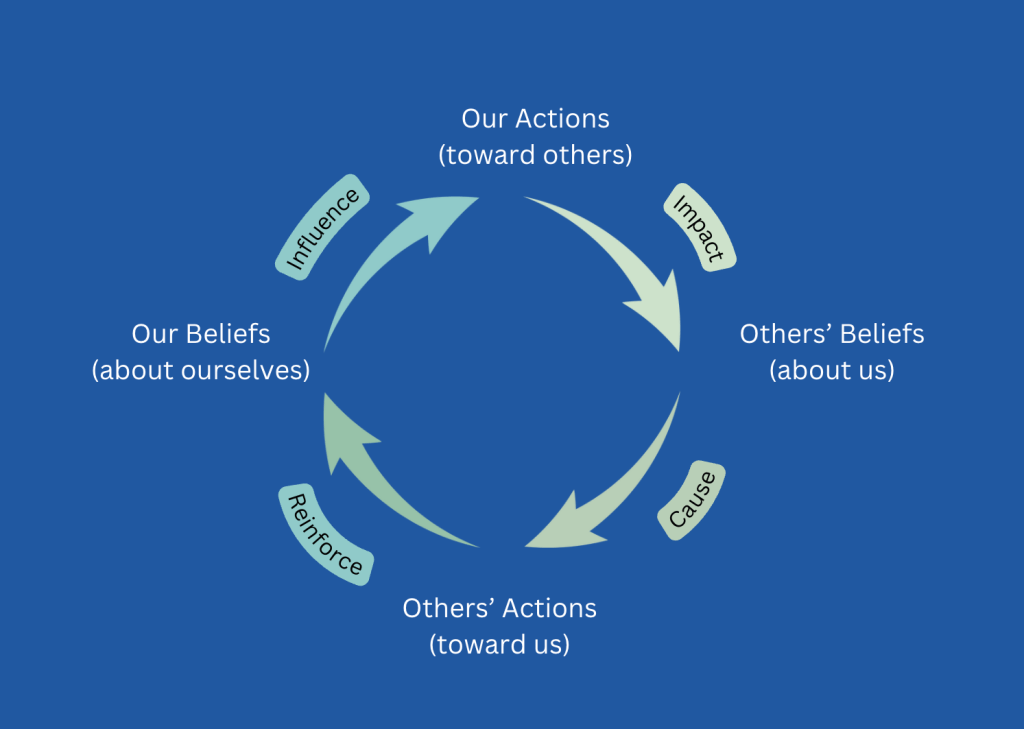
Self-fulfilling prophecies often follow a four-stage cycle. The first stage, belief formation, can either involve positive or negative beliefs that are self-imposed (generated by the individual) or other-imposed (typically implanted by family, peers, or social norms). A person may self-impose the belief that they are incapable of getting an “A” on a test, leading them to study less seriously, prepare poorly, and falter during the exam. Meanwhile, other-imposed beliefs like stereotypes can engender stereotype threat that confirms these baseless claims. For instance, women who were told that men typically scored higher on math tests proceeded to score worse than men on their exams, whereas no such effect was found when women were not reminded of this sexist expectation.
The second stage of a self-fulfilling prophecy is the influence it has on behavior, and the third stage is the fruition of this belief. In an international relations theory known as the Security Dilemma, Country A may falsely believe that Country B is aggressive, leading Country A to build up its military for presumed self-defense. Country B sees Country A’s accumulation of military equipment and becomes alarmed, racing to amass military for itself. This confirms Country A’s belief that Country B was aggressive all along, and Country A further develops its military. Self-fulfilling prophecies are not only large-scale and dangerous—they can also be cyclical. The fourth stage of a self-fulfilling prophecy is the reinforcement of the initial prediction. A college student who believes that they are well-liked by others (Stage 1) will act more gregariously (Stage 2), leading others to reciprocate this friendliness (Stage 3) and the person to further conclude that they are, indeed, well-liked (Stage 4).
Are Self-Fulfilling Prophecies Real?
Although the notion that arbitrary predictions can determine real-world outcomes may seem dubious at best, several experiments have confirmed the existence and potency of these prophecies. In medicine, the well-documented placebo effect serves as a testament to the power of belief in improving health outcomes, even if the person actually received a useless sugar pill. In social psychology, a cornerstone demonstration of self-fulfilling prophecies is Robert Rosenthal’s “Pygmalion Effect,” named after the Greek myth in which a sculptor with strong expectations for his sculpture literally caused his creation to come alive. In 1968, Rosenthal initiated his famous experiment by administering IQ tests to students at a California elementary school. Rosenthal then told teachers that a select group of “intellectual bloomers” were destined for extraordinary performance. In reality, the group randomly designated as “bloomers” were no smarter than any of the other students. However, the power of the self-fulfilling prophecy soon became a reality, and by the end of the school year, students designated as “bloomers” showed substantially higher increases in IQ compared to other peers. The teachers’ misguided perception that certain students were smarter led them to subtly behave differently towards those students, causing the students—in turn—to excel.
Takeaways and Applications
Being cognizant of self-fulfilling prophecies at both the individual and societal levels can help facilitate better outcomes. In everyday life, it is important to remember that the expectations we set for ourselves and positive or negative self-talk can impact the trajectory of our lives. Cognitive Distortions, or irrational patterns of thinking about the world around us, can contribute to deteriorating mental health. A person with social anxiety who believes that they are incapable of fully engaging with others may further withdraw, exacerbating their social anxiety. While belief can only go so far, setting high expectations for ourselves—whether our ability to confidently deliver a speech, make new friends, or adhere to a healthy routine—can be a strong first step in moving us in the right direction.
Equally important is the impact our expectations can have on others’ performance. As teachers, coaches, or parents, innocuous beliefs about how certain kids will fare can alter behavior toward them and come to shape their self-esteem. Treating others as valuable contributors can induce them to become engaged team members while holding negative beliefs can impair their performance. Just as self-doubt can be damaging, fixating on the shortcomings and doubting others’ intentions can be damaging to mutual amiability and interpersonal relationships. For organizations trying to achieve a certain outcome, like gathering support for a political candidate, controlling public opinion can influence voting behaviors. If word goes around that a candidate is going to lose, people may feel that there is no point in voting, thus increasing the likelihood of their candidate losing. Perhaps another lesson of self-fulfilling prophecies is the importance of establishing solid, accurate beliefs. Especially when making important calls, like what long-term stocks to invest in, making decisions based on evidence and thoughtful planning rather than unverified expectations and beliefs typically begets better outcomes.
References:
MediLexicon International. (n.d.). Self-fulfilling prophecy: Meaning, examples, and impact. Medical News Today. https://www.medicalnewstoday.com/articles/self-fulfilling-prophecy
Perera, A. (2024, February 13). Pygmalion Effect: Definition & Examples. Simply Psychology. https://www.simplypsychology.org/pygmalion-effect.html
Plous, S. (n.d.).Lecture 1.6: Self-Fulfilling Prophecies. Social Psychology. Retrieved from https://www.coursera.org/learn/social-psychology/lecture/F4lxG/lecture-1-7-thin-slices-social-judgments-in-the-blink-of-an-eye.
Rothschild, D., & Malhotra, N. (2013, March 23). Are polls and probabilities self-fulfilling prophecies?. Stanford Graduate School of Business. https://www.gsb.stanford.edu/faculty-research/working-papers/are-polls-probabilities-self-fulfilling-prophecies
Wan, Y., & Yang, X. (2019). An empirical study of the self-fulfilling prophecy effect in Chinese stock market. The Journal of Finance and Data Science, 5(2), 116–125. https://doi.org/10.1016/j.jfds.2019.04.001
 Psychology for Society
Leave a comment