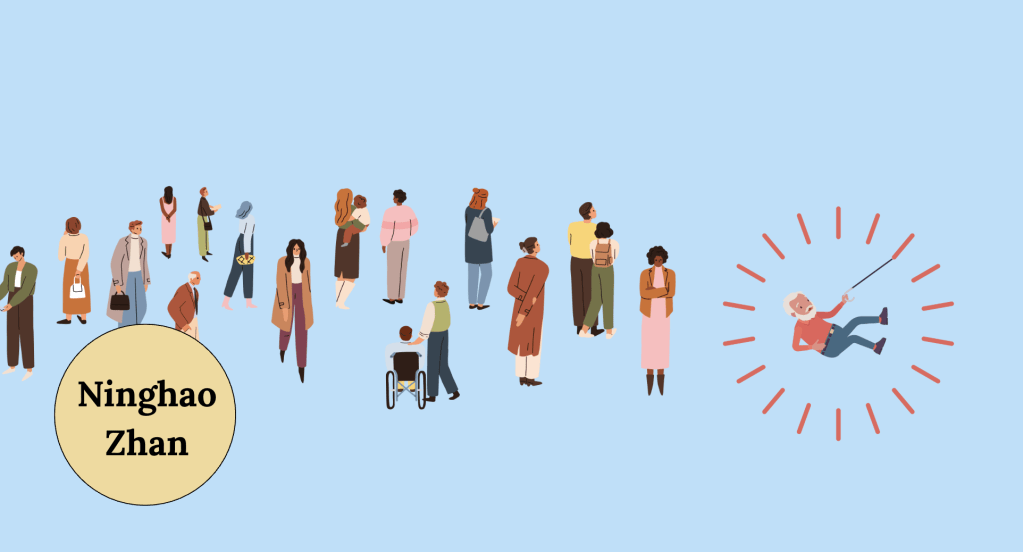

On March 13th, 1964, Kitty Genovese was brutally stabbed by Winston Moseley at midnight when she was arriving home from her late-night shift. She was stabbed twice in the back, neither of which was fatal, before her neighbor was woken up and called out for Moseley to stop. However, Moseley returned 10 minutes later and found Kitty unconscious under the staircase. Now out of sight, Moseley repeatedly stabbed Kitty before stealing from her. Moseley was later arrested during a robbery and died in prison at 81 years old. This event did not receive much media attention at first, however, a news article titled “37 Who Saw Murder Didn’t Call Police” made national headlines two weeks later. The article exposed how 38 people stood by while Kitty received 13 stabs, each bystander believing that other people would report it, which initiated a widespread discussion of the bystander effect.
Intro to the Bystander Effect and Experiments
Social psychologists Bibb Latané and John Darley popularized the bystander effect after the infamous murder case of Kitty Genovese. It occurs when the presence of others discourages people from responding to an emergency. The greater the number of bystanders, the less likely it is for people to respond to an emergency. The bystander effect is attributed to evaluation apprehension, pluralistic ignorance, and the diffusion of responsibility. Evaluation apprehension is the fear of being publicly judged, and pluralistic ignorance is the tendency to rely on others’ reactions when navigating an unknown situation—together, these two factors are categorized as social influence. Diffusion of responsibility refers to the tendency for individuals to feel less compelled to take action when more bystanders are present. Kitty Genovese’s case was a classic example of diffusion of responsibility.
In one of their earlier experiments, Latané & Darley invited participants to fill out a questionnaire independently in a room before filtering smoke (steam) through a small vent. 75% of the participants acted within six minutes, however, when they repeated the experiments and put the participants in groups of three, 62% of the participants carried on working despite the smoke. During their interviews, participants in groups of three revealed that they were “hesitant” to show anxiety, so they looked for signs of anxiety in others. However, everyone else was trying to appear calm, and signs of anxiety were not evident, so they deemed the situation “safe” and believed that they had misinterpreted it. This experiment strongly supported the idea of pluralistic ignorance.
In another one of Latané & Darley’s famous experiments, the “seizure study,” the research associate posed as an NYU student and pretended to have a seizure during a conversation with another student or group of students. The experiment was conducted multiple times in groups of two, three, and six students, including the research associate. There was a stark difference in reaction time and the percentage of the people who reacted between the study’s conditions. When the subjects believed that they were alone with the associate, 85% percent of them reported the seizure within 52 seconds. However, when the subjects were in a group with six others, only 31% reported the seizure, with a longer reaction time of 166 seconds. This experiment is another example of how social influence contributes to the bystander effect, specifically evaluation apprehension and pluralistic ignorance.
How to Avoid Being a Passive Bystander & Reverse the Bystander Effect
It is important to note that if the factors were slightly altered in each of these emergencies, the responses from the bystanders would also differ. In one of the studies conducted in Oxford, it was shown that in more dangerous situations, more people are prone to respond and reaction times tend to be shorter. This occurred because the ambiguity of the problem in this study was clearer than in past experiments. It was also thanks to the elevated public awareness of this emergency that people tended to assess the situation more efficiently. This led to the conclusion that dangerousness and public awareness play important roles in the bystander effect.
To avoid the recurrence of the Kitty Genovese case, Latané & Darley came up with a five-stage decision model of helping. The five stages, in order, are noticing the event, interpreting the event as an emergency, assuming responsibility, knowing what to do, and then deciding to help. People often fail at being active bystanders by assuming others noticed the event too, interpreting the event based on others’ reactions, assuming that others would take responsibility, not having the skills necessary to help, or deciding not to help due to fear of judgment or assumptions that others will. It’s crucial to assess both the situation and your ability to help before intervening. In many cases, it’s better to first seek help from others or simply ask if the person needs assistance. This approach can ensure a more thoughtful and effective response.
References
American Psychological Association. (2022, June). Bystander Intervention Tip Sheet. Apa.org. https://www.apa.org/pi/health-equity/bystander-intervention
Emeghara, U. (2023, September 7). Bystander Effect and Diffusion of Responsibility | Simply Psychology. http://Www.simplypsychology.org. https://www.simplypsychology.org/bystander-effect.html
Latane, B., & Darley, J. M. (1968). Group inhibition of bystander intervention in emergencies. Journal of Personality and Social Psychology, 10(3), 215–221. https://doi.org/10.1037/h0026570
Ruhl, C. (2023, August 3). What Happened to Kitty Genovese. Simply Psychology. https://www.simplypsychology.org/Kitty-Genovese.html
Scott, E. S., Ross, D. A., & Fenstermacher, E. (2021). Stand By or Stand Up: Exploring the Biology of the Bystander Effect. Biological Psychiatry, 90(2), e3–e5. https://doi.org/10.1016/j.biopsych.2021.05.007
Urschler, D. F., Fischer, J., Kastenmüller, A., & Fischer, P. (2015). Bystander Effect. Oxford Bibliographies Online Datasets. https://doi.org/10.1093/obo/9780199828340-0172
Van Bommel, M., van Prooijen, J.-W., Elffers, H., & Van Lange, P. A. M. (2012). Be aware to care: Public self-awareness leads to a reversal of the bystander effect. Journal of Experimental Social Psychology, 48(4), 926–930. https://doi.org/10.1016/j.jesp.2012.02.011
 Psychology for Society
Leave a comment