
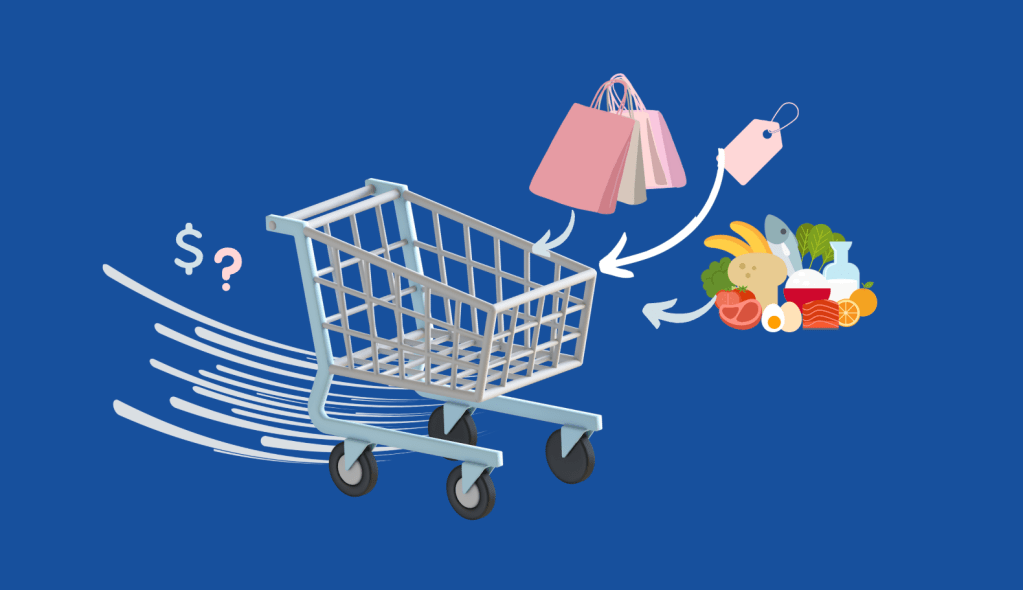

Shopping can bring on a wide array of emotions—anticipation and joy for some, dread and boredom for others. Nevertheless, consumer culture is undoubtedly one of the predominant forces shaping society’s behaviors and values, and is especially conspicuous during the holiday season. Consumerism has received widespread scrutiny, and fields such as Consumer Psychology and Behavioral Economics have emerged to investigate purchasing patterns. For worse or for better, in developed countries, a vast majority of our shopping decisions are entirely up to the us, the consumers, as the products exist to satisfy desires rather than needs. As a result, through clever marketing and faulty logic we often make extraneous purchases that aren’t in our best interests. We buy products we don’t appreciate or experience dismay when spending more than intended. Importantly, by understanding common cognitive biases and gaps in logic, we can ultimately shift to more fulfilling, responsible purchasing.
Our decision making is largely driven by emotions, and its no surprise that fluctuations in mood motivate many irrational purchases. Buying nice clothes or gifts creates a rush of dopamine and pleasure, which reinforces our urge to keep spending more. The thrill of attaining things we love can lead to shopping sprees and “addictions” if this behavior becomes habitual. Negative emotions like anxiety and frustration can be equally responsible for driving consumption. In the face of uncertainty or stress, stocking up on products like hand sanitizer or winter gloves provides an illusion of regaining control. Just as optimism can motivate spending, a sense of restlessness or panic can spur a hunt for products that will ease our negative emotions. For instance, in moments of insecurity people may splurge on expensive makeup products or shoes with hopes of alleviating psychological discomfort. In general, it is a good idea to avoid shopping under time pressure or stress, as this is when our rationality is at its most vulnerable.
Shopping can also feel obligatory at times. Humans highly prize social acceptance, and the need to follow a trend or exhibit a certain social status can impel us towards reckless purchases. If brands manage to convince us that a product aligns with our ideals, buying it can feel crucial to expressing our identity. The expected emotional or social reward of securing a nice product can make the extra money seem worth it. Commitment Bias postulates that once we become set on a particular course of action, we feel immense pressure to continue that behavior even if not pragmatic. At places like Costco, once the first item goes into our cart we “commit” to spending money, and are much more open to adding subsequent items without pause. This can lead to impulsive and last-minute buys, where in the context of spending $50, that extra $2 candy bar makes sense. If we’ve already spent hours wandering a mall or searching for a product online, due to Sunk Cost Fallacy we may feel obligated to purchase something to make our efforts seem worth it. Given the time and energy resources we’ve already invested, we feel compelled to pour financial resources in as well. Norms of Reciprocity also play in, where if we receive extensive help from a salesperson or accept free samples, we feel like we should buy something in return. In this way, shopping can be a very stressful experience, and our decisions about why we choose to purchase something may not always be clear.
Ironically, in trying to save money through discounts we often end up spending more. Instead of focusing on whether we truly like the product, we become blindsided by seemingly good deals that scream at us to purchase. In psychology, Weber-Fechner’s Law describes how we only register a change as meaningful if it differs by a significant percent threshold from the original. Regarding pricing, we are more likely to care that the trendy sneakers that were $60 are now $30 (50% off) than we are to notice the $1,200 laptop is now $1,000 (17% off). Although the laptop discount allows us to save $200, in our minds the sneakers are a much better deal, even if that’s $30 compared to $200 off. Because of these perceptual biases, we find deals that promise a large percentage off to be irresistible, even if the original price is inflated to make the discount seem larger. Additionally, companies often use the Principle of Scarcity, where limited-time offers or products that are selling out appear more valuable to consumers. This fear of missing out on good deals causes us to prematurely pull the trigger on purchases. Due to Loss-Aversion we care more about what we stand to lose than what we can gain. The regret of a missed sale opportunity can in many ways feel more pressing than the actual happiness of having purchased another product.
When we actually decide to buy, the concept of an acceptable price is not always based on logical analysis. Companies often utilize the Anchoring Bias, where once a consumer learns of an initial price, they latch onto this number to measure whether subsequent products are a good deal or not. To illustrate, if the first car in a used-car dealership is priced at $20k then a customer will arbitrarily use this as a reference point and deem a $15k car a steal, and a $35k car pricey. Nevertheless, if that same customer had first been exposed to a $30k car then a $35k car might seem reasonable. Since customers often don’t know how much a product is actually worth, they look for surrounding cues to orient their price range—leading to obvious flaws in logic. This opens the door to Decoy Pricing, where companies push out expensive items to re-anchor the price range around a high number and make their normal prices seem cheap in comparison.
Overall, to make more cogent shopping decisions, the first step is to keep advertising tricks in mind. Buy products because you actually want them, not because of a perceived social obligation or Sunk Cost Fallacy. Do proper research to gain an understanding of the price range, and don’t be sucked in by too-good-to-be-true deals or Decoy Pricing. Try to avoid Commitment Bias and last-minute buys, as these add-ons are often not satisfying in the long run. Taking measures such as not saving your credit card information online can give you those extra seconds of pause needed to register the tangible cost of the purchase. At stores it is easy to checkout with an absent-minded swipe, or even just a tap of the credit card, without having to confront how many hours of hard work went into that transfer. While shopping can be a productive and relaxing experience, it is important to be wary of when our decision-making processes may be going awry.
References
Bouygues, H. L. (2022, August 30). Don’t Let Anchoring Bias Weigh Down Your Judgment. Harvard Business Review. https://hbr.org/2022/08/dont-let-anchoring-bias-weigh-down-your-judgment
Danziger, P. N. (2020, August 23). Consumer Psychology Is The Only Constant In A Changing Retail Market. Forbes. https://www.forbes.com/sites/pamdanziger/2020/08/23/consumer-psychology-is-the-only-constant-in-a-changing-retail-market/
Luna, K., & Yarrow, K. (2019, August). What guides our buying behaviors, with Kit Yarrow, Phd. American Psychological Association. https://www.apa.org/news/podcasts/speaking-of-psychology/buying-behaviors
Sussex Publishers. (n.d.). Consumer Behavior. Psychology Today. https://www.psychologytoday.com/us/basics/consumer-behavior#:~:text=Many%20human%
 Psychology for Society
Leave a comment